
Most drivers know they need an alignment when the car starts to pull, but the choice between a 2-wheel and 4-wheel service can be confusing. Shops and ads toss both terms around, and it is not always obvious which one actually fits your vehicle and your symptoms.
Getting that part right means better tire life, better handling, and not paying for more work than you really need.
What Do 2-Wheel And 4-Wheel Alignments Actually Mean?
An alignment is all about setting the angles of your wheels so they point in the right direction and sit correctly on the road. A 2-wheel (front-end) alignment focuses on the front wheels only. A 4-wheel alignment measures all four and adjusts the rear as well when the suspension allows it.
On many modern vehicles, the rear wheels are just as important as the front for straight tracking and even tread wear. If the rear is off, the front has to work harder to compensate, which is why a full 4-wheel alignment is needed more often than people realize. The type of vehicle you need depends on how the suspension is built and what has gone out of spec.
How A Basic 2-Wheel Alignment Works
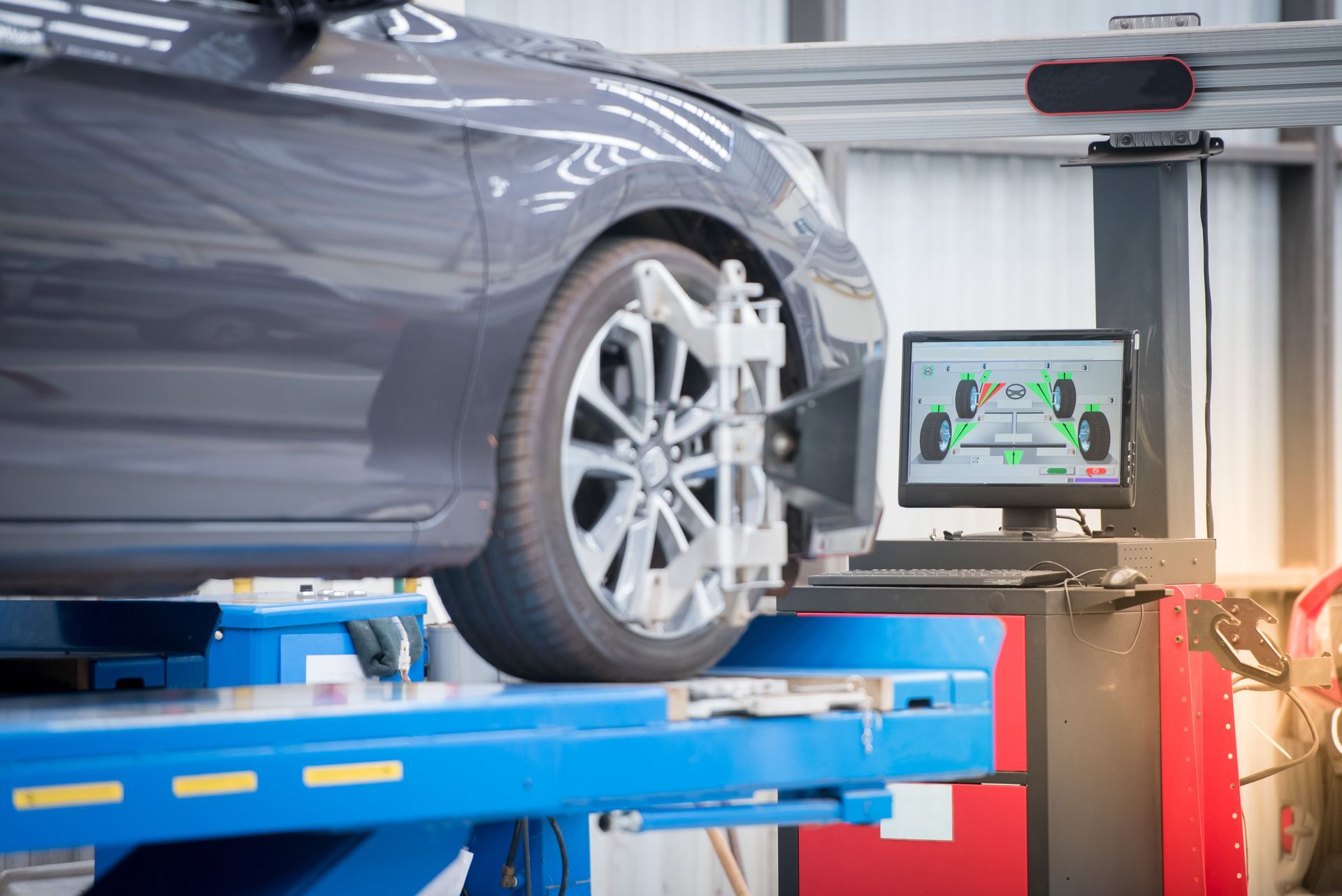
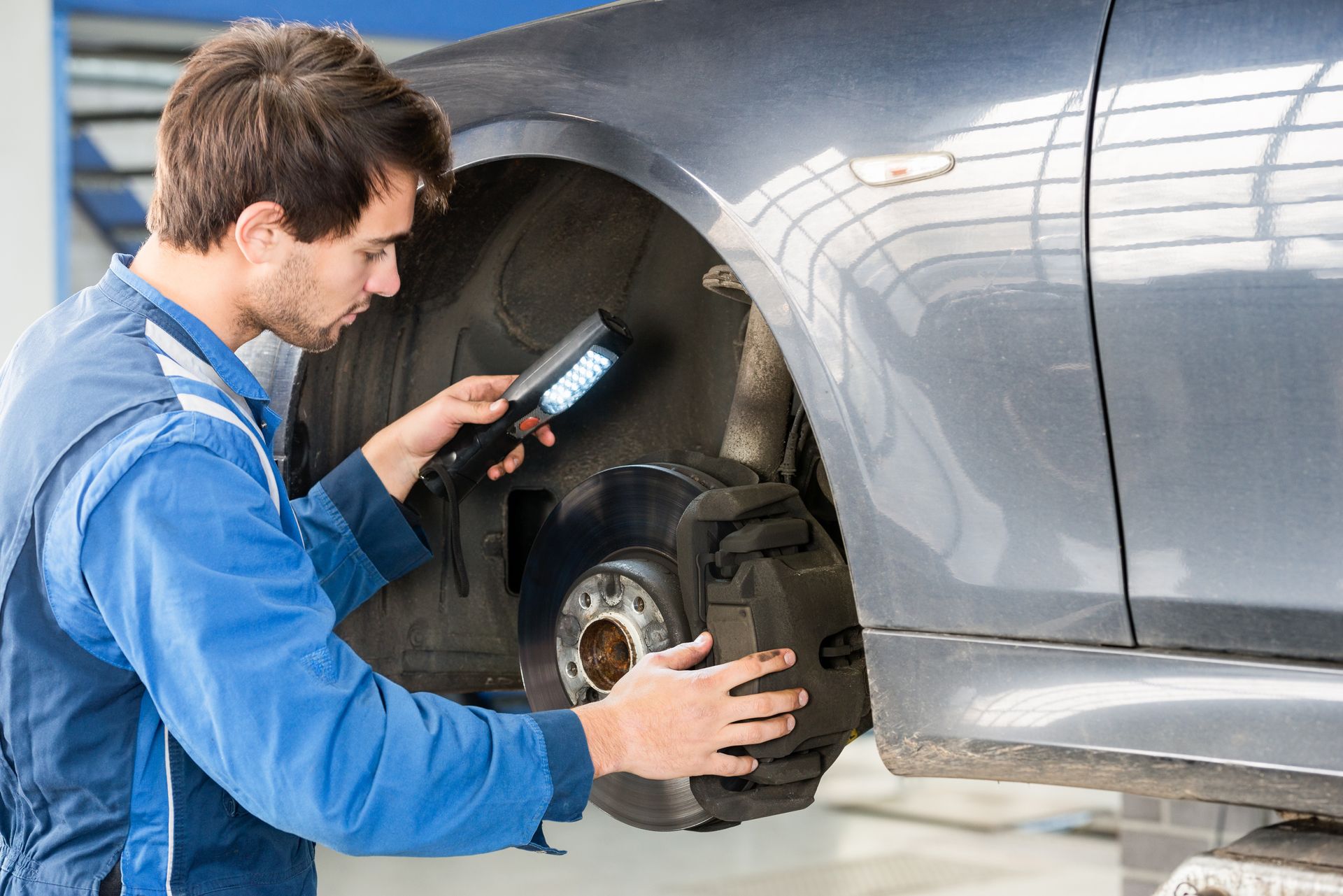
A 2-wheel alignment is usually done on vehicles with a solid rear axle or a rear setup that has no real adjustment built in. We set the vehicle on the alignment rack, attach sensors, and measure angles like toe and camber at the front. The rear is checked, but not adjusted beyond what the design allows.
If the rear is fixed and straight, bringing the front back into spec is often enough to correct a pull, straighten the steering wheel, and stop uneven front tire wear. This type of alignment is common on many older vehicles, some trucks, and models where the rear just does not have adjustable control arms from the factory. It is still a precision job, just focused on one end of the car.
What A 4-Wheel Alignment Adds To The Picture
A 4-wheel alignment measures and adjusts all four corners where the design allows. That means we look at the rear toe and camber, set them correctly, and then align the front to match the rear. On cars and SUVs with independent rear suspension, this is usually the right way to do the job.
When the rear is slightly skewed, the whole vehicle can crab down the road even if the steering wheel looks straight. That leads to odd wear on all four tires and a feeling that the car never quite settles into the lane. A proper 4-wheel alignment centers the vehicle’s thrust line, then makes the steering follow that line so everything works together.
Symptoms That Tell You An Alignment Is Off
Most alignment problems show up in a few familiar ways. You might notice:
- The vehicle pulls or drifts to one side on a fairly flat road
- The steering wheel sits off center when you are driving straight
- Feathered or worn edges on the front or rear tires
- A nervous or wandering feel on the highway that makes you constantly correct
If the pull is strong only under braking, that can point more toward a brake issue than pure alignment. If you see unusual wear on the rear tires, that is a big hint that a 4-wheel alignment, not just a front-end correction, is going to be needed. We listen closely to when and how the symptoms show up before deciding which service fits.
When 2-Wheel Is Enough And When You Really Need 4-Wheel
For some vehicles, especially those with a non-adjustable solid rear axle, a 2-wheel alignment is all that is available. In those cases, the focus is on setting the front to compensate for any small fixed rear deviation, and that is normal. Light trucks and some older models fall into this category and do just fine with a quality 2-wheel service when needed.
On most late-model cars and many crossovers, a 4-wheel alignment is the better option. If the manufacturer built adjustments into the rear suspension, it is because those angles affect handling and tire wear. Whenever we see uneven wear on the rear tires, a history of curb or pothole hits, or suspension work on any corner, a full 4-wheel alignment is the smart way to reset everything instead of only addressing the front.
Common Alignment Myths And Driver Mistakes
There are a few ideas we hear often that do not quite match real-world experience. One is that you only need an alignment when you see obvious tire wear. By that point, some damage is already done. Another is that a 2-wheel alignment is always “cheaper but just as good.” It can be the right choice on certain vehicles, but on cars with adjustable rears, skipping that step can leave you chasing the same pull or wear pattern.
Driver habits matter too. Hitting potholes and curbs, running with low tire pressure, and ignoring a slight pull for months will all shorten tire life. Rotating tires without checking alignment can move a wear issue around instead of solving it. We have seen many sets of tires saved simply because an alignment was done right after the first hint of uneven wear instead of waiting.
Get 2-Wheel Or 4-Wheel Alignment In Plainfield, IL with Precision Diagnostics Inc
If your steering wheel is off-center, the car keeps drifting, or your tires are wearing in strange patterns, an alignment check is a smart next step. We can measure all four wheels, explain whether a 2-wheel or 4-wheel alignment is right for your vehicle, and set everything back to spec.
Schedule alignment service in Plainfield, IL, with
Precision Diagnostics Inc, and we will help your vehicle track straight and protect your tires.